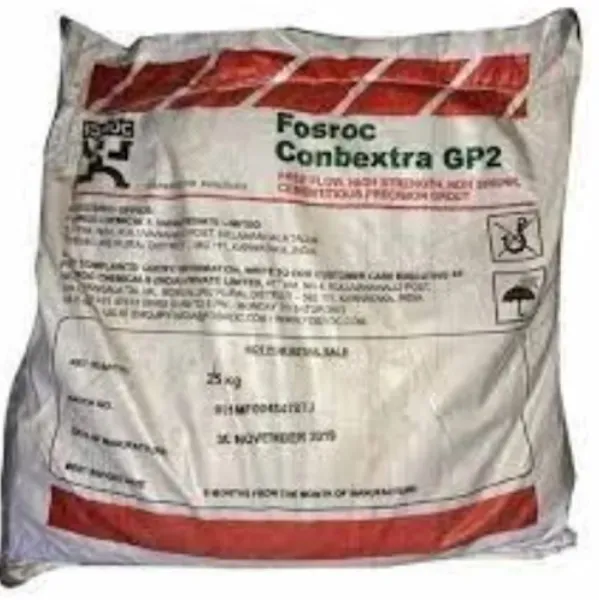
Grouting may appear to be a simple process of filling a gap, but many construction and industrial applications require far greater control. Grout may need to transfer loads, fill voids, support equipment, provide dimensional stability, or achieve reliable contact beneath structural components.
Selecting an appropriate Cement Grout Compound Supplier is therefore important for contractors handling machinery foundations, base plates, structural gaps, precast work, and other precision applications.
Projects in Gujarat range from commercial buildings to industrial installations, making correct grout selection particularly relevant.
Understand What the Grout Must Do
The first question should be about function.
A general gap-filling material should not automatically be used where engineering requirements call for a specialised grouting compound.
Applications can include:
- Machine base plates
- Equipment foundations
- Structural supports
- Precast connections
- Anchor locations
- Bearing areas
- Column-related grouting
- Selected repair voids
Each application may have specific flow, strength, dimensional stability, and placement requirements.
Flowability Matters
Grout often needs to move into confined spaces where conventional mortar cannot be compacted easily.
The required consistency depends on gap geometry and application procedure.
Adding excessive water merely to improve flow can affect the intended properties of cementitious grout. Water quantity should therefore follow the manufacturer's specified range.
Consider Gap Thickness
Grout selection may depend on the depth and dimensions of the space being filled.
A material suitable for one gap range may not be recommended for a significantly deeper placement.
Large-volume pours may also require special planning because temperature development, placement sequence, and aggregate addition recommendations can vary by product.
Surface Preparation Cannot Be Ignored
The receiving surface should generally be sound and free from contaminants that interfere with bonding.
Loose concrete, dust, oil, grease, and debris can compromise the application.
Depending on the grout system, pre-wetting of concrete may also be required. Standing water should not simply be left in place unless specifically permitted by the technical instructions.
Plan Placement Before Mixing
Grouting work should be organised before material preparation begins.
Contractors should confirm:
- Required quantity
- Mixing equipment
- Water measurement
- Formwork condition
- Pouring access
- Placement direction
- Crew responsibilities
- Curing arrangements
This becomes particularly important because cementitious grouts have defined working times.
Avoid Common Site Shortcuts
Frequent mistakes include estimating water instead of measuring it, mixing by inconsistent methods, using unsuitable formwork, delaying placement after mixing, and ignoring curing.
Such shortcuts can undermine an otherwise suitable product.
For industrial and infrastructure work in Gujarat, documentation and application discipline can be as important as procurement.
Dolfin Projects supplies construction chemicals for grouting and related applications, enabling contractors to source materials according to project requirements.
A successful grouting operation combines suitable material selection with preparation, accurate mixing, controlled placement, and curing. Contractors who evaluate all four areas are better positioned to achieve consistent results in demanding construction and equipment-support applications.
Keywords