A durable industrial floor depends on more than the resin in the drum: moisture, preparation, system build, curing conditions and chemical exposure all determine whether the coating bonds or fails. By the end, you will be able to compare suppliers, verify their documents and choose an epoxy system that matches your substrate, traffic and service environment.
Key takeaways
- Match the coating system to chemicals, temperature, traffic and moisture exposure.
- Request technical data sheets, safety data sheets, batch records and shelf-life details.
- Require moisture readings, surface preparation records and pull-off bond strength tests.
- Compare complete systems and written support commitments, not drum prices alone.
Start with the Exposure, Substrate and Required System Build
Define the coating requirement from the service conditions, not from a supplier’s catalogue. Record the chemical exposure, spill frequency, cleaning chemicals, operating temperature, sunlight, standing water, impact risk, and forklift traffic class before requesting prices.
1. Complete a concrete substrate assessment. Record concrete age, existing paint or tile, oil contamination, cracks, joints, laitance, and the preparation method required. Ask for the manufacturer’s acceptable surface profile and specify shot blasting, diamond grinding, or scarifying where needed.
2. Set the moisture and application limits by named methods. Request the permitted ASTM F2170 in-situ relative humidity or ASTM F1869 moisture-vapour emission result; these tests are not interchangeable. Require substrate, air, and coating temperatures to stay above the dew point throughout application and early cure.
3. Specify the complete system build: primer, repair material, body coat, broadcast aggregate, and topcoat, with target dry-film thickness for each layer. A rigid epoxy is not a crack-bridging membrane, so detail active joints and moving cracks separately. For outdoor or strongly sunlit areas, require a tested UV-resistant polyurethane or other weatherable topcoat.
Ask the industrial epoxy coating supplier for temperature-based pot life, recoat, light-traffic, full-cure, and immersion-service data. Do not treat pot life as the usable application window; a large mixed batch can heat rapidly and lose workability early.
Test the Supplier’s Documents, Stock Control and Technical Support
A dependable supplier proves control over the material after the sale, not merely a catalogue entry. Request current documents for the exact product and confirm that the batch delivered matches them.
- Technical data sheet showing mixing ratio by weight and volume, coverage assumptions, pot life, recoat window, full-cure time, temperature and humidity limits, and storage temperature
- Safety data sheet with hazard controls, spill response, ventilation requirements, and disposal instructions
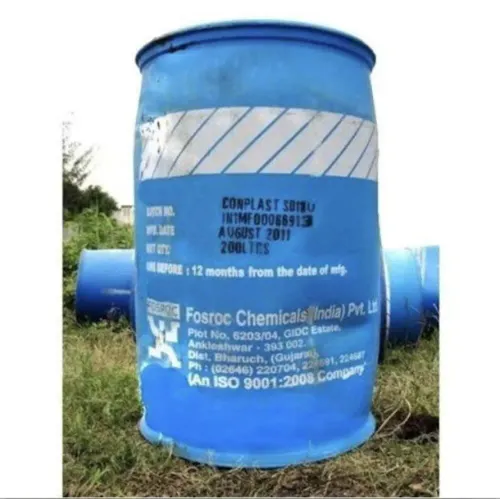
- Batch number, manufacture date, expiry date, and epoxy shelf life printed on every component
- Batch traceability linking resin, hardener, pigment, and aggregate to a delivery record
- Written confirmation of stock rotation, available quantity, lead time for replenishment, and replacement action for damaged, expired, or mismatched material
- Written change-notification process for reformulation, packaging, color, aggregate grading, or manufacturing-site changes
Do not accept a field-estimated mix ratio or a partially opened kit. Small stoichiometric errors can leave a soft, tacky, chemically weak film. Ask for temperature-dependent data: pot life is not the application window, recoat window, or chemical-service time, and a large mixed batch can heat rapidly and lose workability.
Technical support must address the complete system. For wet or aggressive exposure, request cured-system test evidence with the project chemicals, including adhesion after exposure and inspection for blistering, softening, swelling, and delamination. For exterior areas, require a tested UV-resistant topcoat; epoxy alone can chalk or yellow.
The supplier should also provide dew-point limits and respond with a written application method, not a generic ambient-temperature range.
Verify Concrete Moisture, Preparation and Bond Strength
Before epoxy reaches the floor, the supplier and installer must agree on measurable acceptance limits for moisture, preparation and adhesion. “Dry concrete” is not a test result; record the method, result and product-specific limit.
1. Measure slab moisture using ASTM F2170 for in-situ relative humidity or ASTM F1869 for moisture-vapour emission. These results are not interchangeable. Excessive moisture can cause blistering, debonding, osmotic bubbles and amine-related defects, so do not proceed until the system’s stated limit is met.
2. Specify the preparation method and surface profile in writing. Shot blasting, diamond grinding or scarifying must remove laitance, curing compounds, oil, weak concrete and dust. Repair holes and cracks, then verify that the resulting surface profile matches the coating manufacturer’s requirement.
3. Check condensation risk throughout application and early cure. Measure the substrate, air and uncured coating temperatures, and keep the substrate sufficiently above the dew point. A generic ambient-temperature range does not replace the supplier’s temperature and humidity limits.
4. Confirm bond strength with ASTM D4541 pull-off adhesion testing. The specification must state the minimum value, test locations and whether concrete cohesive failure is required. A high reading with failure in weak concrete means something different from adhesive failure at the coating interface.
5. Establish the response to amine blush before recoating. A waxy, greasy or cloudy film requires the specified cleaning, abrasion and inspection procedure, and the product data must identify whether the epoxy tolerates blush. Reject the system plan if it supplies no acceptance criteria or test records.
Control Mixing, Application Conditions and Film Thickness
Durable cure depends on three controls: correct proportioning, a dry application environment, and the specified film build. Ignore any one of them and a sound substrate can still develop tacky patches, blisters, weak adhesion, or premature wear.
- Follow the epoxy mixing ratio by weight or volume exactly. Mix complete kits unless the supplier gives a measured component procedure; guessing from partly filled containers creates stoichiometric errors. Record the batch numbers and mixing time.
- Treat pot life as the working life of the mixed material, not its recoat window or chemical-service time. Mixed mass, container shape, substrate temperature, and air temperature change heat build-up and workability. Mix smaller batches when the supplier’s temperature data require it.
- Measure substrate temperature, air temperature, relative humidity, and dew point before coating and during early cure. Keep the substrate above the stated dew-point margin throughout application; condensation can cause whitening, blistering, or debonding.
- Use a wet-film thickness gauge during application and compare readings with the coverage calculation. A thin film loses protection; an excessive film can trap solvent, cure unevenly, or crack.
| Control | Confirm from supplier or installer | Failure if missed |
|---|---|---|
| Mixing | Ratio, induction time, pot life, and batch size | Soft or chemically weak film |
| Environment | Temperature, humidity, dew point, recoat and full-cure limits | Condensation, amine blush, or poor adhesion |
| Surface build | Wet-film thickness, aggregate rate, encapsulation, and texture | Uneven protection or a slippery wet floor |
Do not release the floor to forklifts, chemicals, or immersion until the specified cure stage has been reached. A supplier’s written time-temperature schedule is more reliable than a generic “overnight cure” claim.
Compare Complete Systems, Service Evidence and Supplier Accountability
Choose the supplier that proves the complete floor build will perform in your service conditions, not the one offering the lowest resin price. Compare each system’s tested finish, installation window, maintenance burden, and replacement plan against the same operating risks.
| System | Main advantage | Decision check |
|---|---|---|
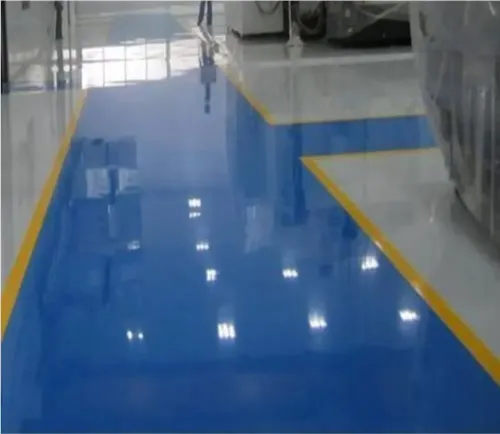
| solvent-free epoxy | Low-odour, high-build protection for many interior areas | Confirm chemical immersion results, moisture limits, slip texture, recoat window, and full-cure time |
| polyurethane topcoat | Better resistance to ultraviolet exposure and weathering over epoxy | Require data for the epoxy-primer-and-topcoat assembly, not the topcoat alone |
| MMA flooring | Rapid return to service and useful performance at low temperatures | Check odour control, installer competence, substrate preparation, and repair compatibility |
| polished concrete | No applied film to blister or delaminate | Accept its dust control, stain, abrasion, and traction limitations before choosing it |
Reject a proposal that gives only component data, an unqualified “slip-resistant” claim, or pot life without temperature-dependent recoat and service times. For wet areas, demand the complete surface build-up, aggregate size and broadcast rate, and a named traction test result.
Before ordering, ask for batch traceability, manufacture date, shelf life, storage temperature, replacement terms, lead time, and a named site contact. Ask Dolfin Projects to record these items against the quotation and confirm who investigates a failed bond, blister, or colour mismatch. The accountable supplier remains involved after delivery.
Related products
 | Epoxy Floor Coating Supplier Packaging Size 20 Liter Usage/Application Industrial Packaging Type Bucket Product Type Epoxy Coatings Chemical Physical State Liquid... View product → |
 | Epoxy Floor Coating Industrial Epoxy Floor Coating Service Components Resins Industries Served Pharmaceuticals Service Location Type Industrial Classification Self Levelling Location Pan India Service Type... View product → |
Frequently asked questions
What should you assess before requesting epoxy coating prices?
Record chemical exposure, spill frequency, cleaning chemicals, operating temperature, sunlight, standing water, impact risk and forklift traffic. Then identify the substrate and required primer, body coat and topcoat build.
Which supplier documents and support should you request?
Ask for the technical data sheet, safety data sheet, application method, coverage or consumption figures, recoat window, pot life, cure schedule, batch number, manufacture date, shelf life and storage conditions. Confirm the supplier provides job-specific technical guidance.
How do you verify that concrete is ready for epoxy coating?
Check concrete moisture, remove laitance and contamination, profile the surface mechanically, repair defects and record preparation. Confirm adhesion with a pull-off bond strength test before approving the full application.
What application controls affect epoxy coating durability?
Control component ratios, mixing time, induction time when specified, pot life, substrate and air temperature, relative humidity, dew-point spread, wet-film thickness, recoat timing and final dry-film thickness.
Related products
 | Chryso Waterproofing Products Supplier Form Liquid Color White Packaging Size 20 LITRE Packaging Type Bottle Brand Chryso Country of Origin Made in India Colour Gray Minimum order... View product → |
 | Bonding Agent Fosroc Nitobond EP Epoxy Bonding Agent Supplier Packaging Size 6 Litre Brand Fosroc Packaging Type Jar Shelf Life 24 Months Form Liquid Application Industry Construction Country of Origin... View product → |
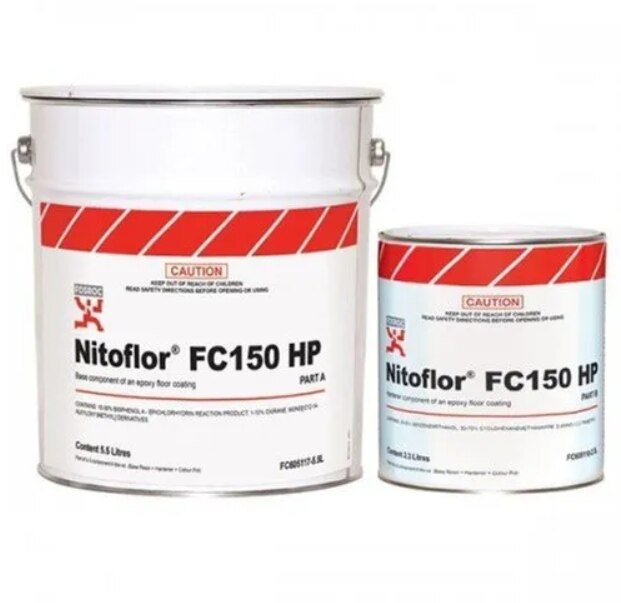 | Epoxy Floor Coating Fosroc Nitoflor FC150 HP Solvent Free Epoxy Floor Coatin Supplier Packaging Size 20 L Brand Fosroc Usage/Application Construction Form Liquid Country of Origin Made in India Dry film thickness 500 microns... View product → |