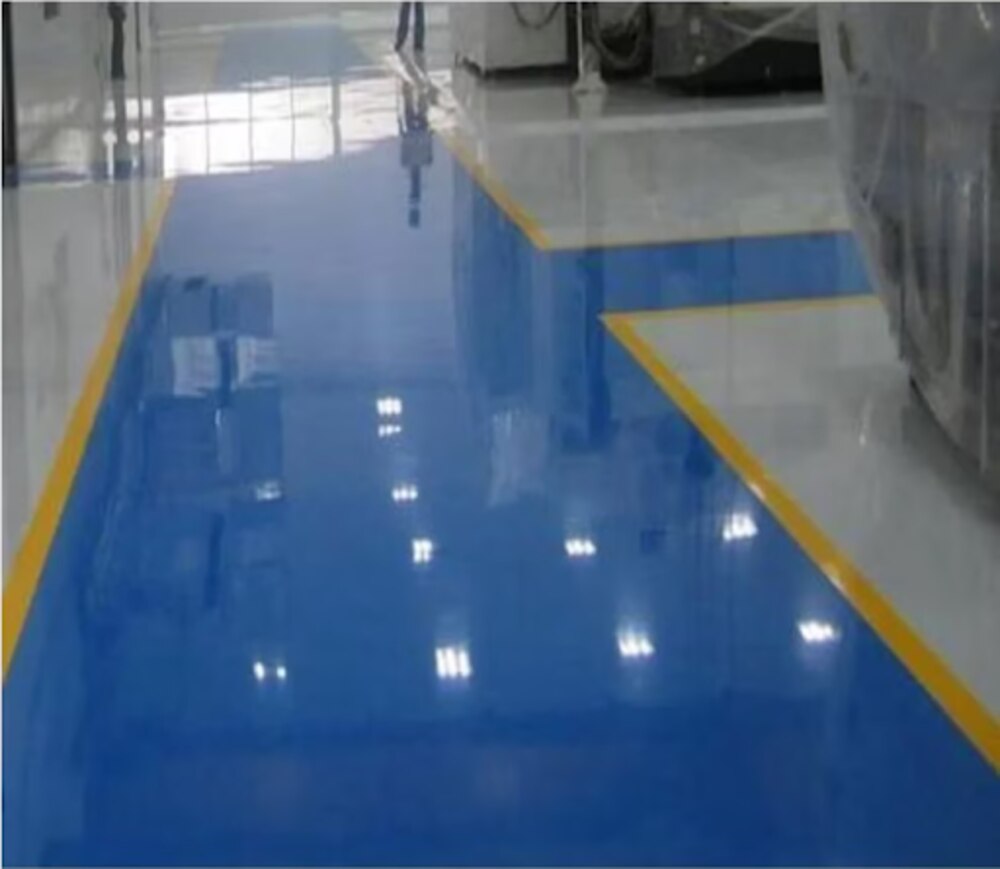
A worn factory or warehouse floor does not automatically need epoxy. By examining the slab, operating conditions, traffic, contamination, moisture and maintenance demands, you can decide whether coating is justified, which system class fits, or whether another repair is the safer investment.
Key takeaways
- Repair structural movement before specifying an epoxy coating.
- Test slab moisture, strength, cracks, and surface soundness first.
- Match coating thickness and texture to traffic, chemicals, and cleaning methods.
- Compare preparation, materials, labour, curing time, and warranty—not price alone.
Does Your Floor Need Epoxy, or a Different Repair?
An industrial epoxy floor coating is justified when the concrete needs a cleanable, abrasion-resistant surface and the slab is sound, dry, and stable. It is not a cure for structural movement, rising damp, or a weak substrate.
Request an epoxy assessment if your factory flooring or warehouse flooring shows:
- Concrete dusting that contaminates products, machinery, or forklift wheels
- Oil absorption, recurring chemical spills, or cleaning difficulty
- Forklift turning wear, pallet impact, steel-wheel abrasion, or dropped-load damage
- A failed coating that is peeling, blistering, or delaminating
- Damaged joints, surface scaling, or hygiene requirements that bare concrete cannot meet
Choose the repair according to the failure. Retain bare concrete where traffic and cleaning demands are low; use a concrete sealer for limited dust control and absorption reduction. Use a cementitious topping for local profile correction or slab rehabilitation, and consider polyurethane flooring where flexibility or thermal-shock resistance matters more than rigid epoxy performance.
Do not approve epoxy over active cracks, moving joints, unresolved water ingress, severe substrate cracking, or persistent moisture. ASTM F2170 relative-humidity testing, ASTM F1869 calcium-chloride testing, and ASTM F710 surface moisture and pH evaluation provide decision evidence before specification.
Sustained sunlight also changes the choice: an aliphatic polyurethane or polyaspartic topcoat retains colour better than conventional epoxy. For concrete dusting, light traffic may need only a thin film; forklifts, impacts, and heavy wear call for a high-build broadcast or resinous mortar system.
Check the Slab Before You Specify a Flooring System
Do not approve an epoxy system until the slab’s moisture, surface condition, strength, joints and contamination have passed documented checks. A dry-looking surface can still contain enough moisture to cause blistering, osmotic debonding, whitening or delayed cure.
- Record the slab age, concrete strength, repair history, drainage, falls and areas exposed to oil, grease, cutting fluid or hydraulic leaks.
- Complete moisture testing at representative locations, including low areas and exterior walls. Use in-situ relative humidity testing under ASTM F2170 and calcium-chloride moisture-vapour emission testing under ASTM F1869 where specified by the flooring manufacturer. Use ASTM F710 to evaluate surface moisture and pH, then compare every result with the selected epoxy system’s written limits.
- Inspect for dusting, laitance, curing compounds, weak concrete and embedded contamination. Specify the required ICRI 310.2R concrete surface profile, such as CSP 3 to CSP 6 where the system requires a mechanically prepared industrial profile; do not accept “clean” as a preparation standard.
- Map cracks, construction joints, isolation joints and saw-cut control joints. Assign each a treatment detail; coating directly across an active joint invites reflective cracking or delamination.
- Test representative prepared areas for adhesion and contamination removal, especially where oil has entered the pores. Degreasing alone can leave a bond-inhibiting residue.
- Confirm drainage, chemical exposure, forklift loading, washdown temperature and planned service conditions before approval.
If moisture exceeds the product limit, the slab has active water ingress or the surface lacks sound concrete, fix that condition before specifying epoxy. A coating cannot repair it.
Match Preparation and Floor Design to Actual Plant Conditions
Specify the floor around actual abuse, not a generic “industrial epoxy” label. State the required concrete surface profile using ICRI 310.2R, which classifies profiles from CSP 1 to CSP 10; choose the profile required by the resin system and create it mechanically.
1. Remove laitance, curing compounds, oil and weak concrete by shot blasting, diamond grinding or scarification. Acid etching alone can leave pore contamination behind. Where oil, grease or hydraulic fluid has soaked in, include extraction and trial adhesion testing rather than relying on surface degreasing.
2. Keep movement joints functioning. Saw-cut or existing joints need compatible sealant and a joint detail that permits movement; do not bridge them with a rigid film and expect cracking to stop. Repair spalled joint edges before coating and record every crack, drain and penetration in the layout.
3. Match the build to the load. A thin-film coating suits dust control and light-to-moderate traffic; a high-build broadcast system or resinous mortar suits forklifts, impact, profile correction and heavy wear. Check tyre loads, turning points, pallet drops and washdown temperatures, because thickness cannot strengthen a weak slab.
4. Check chemicals by name, concentration, temperature, exposure time and contact type. Continuous immersion, hot washdown, solvents and concentrated acids require resistance data for the cured system, not a generic “chemical resistant” claim.
5. Broadcast aggregate into the wear layer where slip resistance is needed. Select the smallest texture that meets the hazard: coarse or heavily loaded aggregate improves grip but traps dirt, increases tyre noise and accelerates wear. Set cleaning access, drainage and return-to-service limits before installation.
Control Mixing, Application and Curing on Installation Day
An installation fails early when the crew treats epoxy like paint. Control every stage against the product technical data sheet, not the calendar or a single advertised cure time.
- Record slab temperature, air temperature, relative humidity, and dew point before work and during the shift. Keep the substrate several degrees above dew point throughout application and early cure. Condensation or a falling slab temperature can cause amine blush, poor wetting, and loss of adhesion.
- Check the epoxy mixing ratio exactly as specified, by weight or volume. Use calibrated containers or scales, mix with a mechanical mixer at the stated speed, and scrape the sides and bottom. An incorrect ratio leaves soft, tacky, or brittle areas.
- Treat pot life as starting when resin and hardener are combined. Mix only the quantity the crew can place within that period; never thin, remix, or retemper material after it begins to gel.
- Confirm coverage and wet-film thickness during application. Spread too thin and the floor loses protection; apply too thick and solvent entrapment, bubbling, or slow cure can follow.
- Mark the recoat window and protect the floor from dust, water, sunlight, and unapproved traffic. Write the epoxy floor curing time into the shutdown plan, separating walk-on access from forklift traffic, chemical washdown, and full service.
Release the area only after the installer records temperature, humidity, batch numbers, coverage, and the specified handover criteria.
Compare Complete Systems Before You Approve the Work
The lowest resin price can produce the highest maintenance cost. Compare each quotation as a complete floor system, not as a bucket of epoxy, and require the same measured area, thickness and preparation scope from every bidder.
| System | Best fit | What to compare |
|---|---|---|
| Thin-film epoxy | Dust suppression and light-to-moderate service | Dry-film thickness, abrasion data and exclusions for forklift traffic |
| High-build epoxy | Greater wear, impact tolerance and profile correction | Thickness, aggregate broadcast, compressive strength and recoat method |
| Resinous mortar | Heavy industrial wear, severe impact or damaged profiles | Trowel-applied thickness, aggregate grading, joint detailing and repair procedure |
Your comparison sheet should require these items in writing:
- Concrete preparation method and target ICRI 310.2R surface profile, such as CSP 3 to CSP 6; “clean and sound” is not measurable.
- Moisture test method and result, including ASTM F2170 relative humidity or ASTM F1869 calcium-chloride testing, plus the pass limit.
- Product data for dry-film thickness, abrasion, compressive strength, chemical resistance and slip-resistant aggregate.
- Separate pricing for crack and joint repairs, oil-contaminated concrete, trial areas and reinstatement of drains or edges.
- A cure schedule showing walk-on time, recoat window, chemical-washdown time and approved return to forklift traffic at the site temperature.
- Handover criteria, cleaning instructions, warranty exclusions and the method for repairing chips or delamination.
Ask Dolfin Projects to identify whether its proposed system is a thin film, high-build epoxy or resinous mortar, and to tie that choice to your wheel loads, chemicals and shutdown window rather than quoting resin alone.
Related products
 | Epoxy Floor Coating Industrial Epoxy Floor Coating Service Components Resins Industries Served Pharmaceuticals Service Location Type Industrial Classification Self Levelling Location Pan India Service Type... View product → |
 | Epoxy Floor Coating Supplier Packaging Size 20 Liter Usage/Application Industrial Packaging Type Bucket Product Type Epoxy Coatings Chemical Physical State Liquid... View product → |
Frequently asked questions
Does every damaged factory or warehouse floor need epoxy?
No. Epoxy suits sound, dry, stable concrete needing a cleanable and abrasion-resistant surface. Repair structural movement, rising damp, or weak concrete first.
What should you check before specifying an industrial epoxy floor?
Check slab moisture, compressive or pull-off strength, cracks, joints, contamination, laitance, levels, and evidence of movement before choosing the system.
How should you match an epoxy flooring system to plant conditions?
Specify the system around forklift traffic, impact, abrasion, chemical exposure, temperatures, cleaning equipment, slip risk, drainage, and required thickness.
What must be controlled during epoxy floor installation?
Control substrate preparation, component ratios, mixing time, application conditions, recoat intervals, ventilation, access, and full curing before loading the floor.
Related product
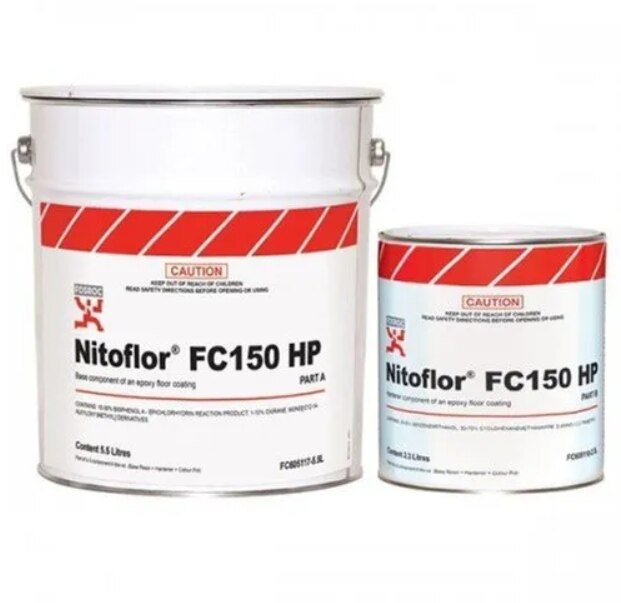 | Epoxy Floor Coating Fosroc Nitoflor FC150 HP Solvent Free Epoxy Floor Coatin Supplier Packaging Size 20 L Brand Fosroc Usage/Application Construction Form Liquid Country of Origin Made in India Dry film thickness 500 microns... View product → |