A grout supplier can hand you a high-strength product that still fails when its flow, shrinkage control, moisture tolerance or placement method does not match the repair. By the end, you will have a practical way to screen materials, calculate what the site needs and compare suppliers on evidence rather than brand names alone.
Key takeaways
- Match non-shrink grout to loaded baseplates and precision anchors.
- Request test reports, batch numbers and delivery records before acceptance.
- Confirm aggregate size, consistency and quantity before placing the order.
- Follow water dosing, placement, finishing and curing instructions on site.
Match the grout type to the structural job
Choose the material by the failure you must prevent, not by the word “grout” on the bag. Ordinary cement grout suits non-critical filling where shrinkage and movement are controlled; it is a poor choice beneath a loaded baseplate or around precision anchors.
| Option | Best fit | Main limits |
|---|---|---|
| Ordinary cement grout | General void filling, bedding and repairs with stable loads and wide access | Shrinkage and weak water resistance can leave gaps beneath loads |
| Non-shrink cement grout | Baseplates, machine foundations, anchor pockets and precast joints needing load transfer | It does not seal moving cracks or replace waterproofing; confirm ASTM C1107/C1107M data at the specified consistency |
| Epoxy grout | High-bond repairs, chemical exposure and precise anchor or crack rebonding on sound, dry concrete | Check moisture limits, working time, temperature range, maximum pour thickness and heat buildup in deep pours |
| PU injection foam grout for leaking voids | Water-bearing cracks, joints and concealed voids where expansion and water stopping matter | Foam is not automatically a structural load-transfer material; select a compatible structural resin when rebonding is required |
For active or moving cracks, rigid epoxy can reopen or debond; use a flexible polyurethane system or movement-rated resin when the design requires it. Match the material to access: dry-pack for hand-packed narrow pockets, pourable or pumpable cement grout for deep congested spaces, and injection-grade resin for drilled ports and fine cracks.
Run a mock-up before committing deep voids, congested reinforcement or rapid-setting material. Check air entrapment, segregation, premature set and bond. Grout alone does not replace waterstops, joint detailing, drainage or proper crack termination.
Demand test evidence and traceable delivery documents
A structural grout is supported by test records tied to a specific formulation, consistency and batch—not by the words “non-shrink” on a bag. Request documents that show performance under the conditions your placement will use.
- A technical data sheet and independent test report stating the applicable edition of ASTM C1107/C1107M, tested consistency, permitted water range, expansion result and compressive-strength values.
- Strength reports identifying whether ASTM C109/C109M mortar cubes or ASTM C39/C39M concrete cylinders were used, plus specimen size, curing condition, test age and grout consistency. A 28-day cube result cannot be compared directly with a cylinder result.
- An ASTM C827/C827M expansion test report for early-age volume change, followed by the long-term shrinkage or length-change method and result relevant to the repair. Early expansion alone does not prove dimensional stability after hardening.
- A certificate of analysis linked to the delivered lot, showing batch number, manufacture date, expiry date, packaging condition and storage limits.
- A traceable invoice and delivery record for every load, with a written procedure for rejecting or handling bags exposed to moisture or damaged packaging.
For fluid grout, request the ASTM C939/C939M flow-cone time, test temperature, mixing time and water addition. Treat it as a batch-control value, not proof that the grout will fill every void. Reject claims that provide only a high strength number without test method, consistency, curing and traceability.
Choose consistency, aggregate size and quantity before ordering
Measure the void before choosing the bag: width, depth, access, reinforcement congestion and placement equipment determine consistency more reliably than compressive strength.
Dry-pack grout suits tight, shallow pockets reachable for hand tamping; pourable grout suits open, confined spaces where gravity can carry material around steel; pumpable grout needs stable flow, adequate hose diameter, venting and flow retention over the pumping distance; injection-grade grout belongs in narrow cracks or voids reached through ports, with the formulation selected for structural rebonding or water stopping.
| Option | Aggregate and placement | Reject it when |
|---|---|---|
| Dry-pack grout | Coarse enough to hold shape during tamping; shallow, accessible pockets | The void is deep, obstructed or cannot be compacted fully |
| Pourable grout | Fine aggregate and tested flow for gravity placement | Trapped air cannot escape or the flow path is long |
| Pumpable grout | Particle size compatible with the pump and hose; documented flow retention | Aggregate bridges at bends or the mix segregates |
| Injection-grade grout | Fine, port-injectable material suited to the crack or void | The opening exceeds the product’s injection range |
Calculate quantity as length × width × depth, then convert the volume to litres or cubic metres. Divide that figure by the bag yield printed on the technical data sheet, and add a measured allowance for spillage and irregular voids; never divide by bag weight alone.
- Confirm aggregate size, maximum lift or pour depth, water dosage, allowable water range and pump distance.
- For large placements, obtain minimum and maximum placement temperatures, curing instructions, staged-pour limits and thermal-monitoring requirements.
- Prevent jobsite retempering: extra water can increase bleeding, shrinkage and cracking while invalidating published performance.
Control preparation, placement and curing at the site
Prevent air pockets, weak bonds, leakage and early-age cracking by controlling the substrate, formwork, placement and curing as one operation. Start with concrete surface preparation: remove laitance removal, dust, oil, loose concrete and standing water, then pre-wet the substrate without leaving puddles.
ACI 351.1R treats this preparation as part of reliable bearing contact, not cosmetic cleaning.
- Seal formwork joints and penetrations before mixing. Check formwork sealing with a dry inspection; leaking grout loses fines and leaves voids beneath the baseplate.
- Place from one side or the lowest access point so grout advances continuously and pushes air toward planned vents. Do not trap air behind reinforcement or closed edges.
- Use the specified water dosage and mixing time. Do not add water for late workability; retempering can increase bleeding, shrinkage and loss of strength.
- Consolidate only by the method approved for that grout. Excessive vibration can separate the mix, while no consolidation leaves unfilled pockets.
- Keep within the supplier’s lift thickness, placement-temperature range and maximum pour volume. For large pours, obtain staged-placement and thermal-monitoring instructions before work begins.
Protect exposed grout immediately after finishing. Plan grout curing Gujarat monsoon conditions around rain, rapid drying, washout and temperature changes; use the stated curing compound, wet covering or other approved method for the full duration. Record batch number, water added, flow-cone time where ASTM C939/C939M applies, start and finish times, temperature and any interruptions.
Compare suppliers on execution support, not catalogue brands
Qualify reliability by demanding evidence of execution, not promises about a brand. Before issuing a purchase order, ask the supplier to connect every delivery to the placement, storage conditions and site procedure you will use.
| Evidence to verify | Reliable execution signal | Warning sign |
|---|---|---|
| Batch traceability | Batch number, manufacture date and traceable invoice appear on each delivery | Generic invoice or missing lot details |
| Certificate of analysis | The certificate identifies the supplied batch and reports the specified tests | Undated, batch-free certificate or marketing sheet |
| Shelf life and storage | Written shelf life and storage limits cover your planned delivery and site conditions | Aged material, heat exposure or unclear expiry date |
| Packaging integrity | Bags, pails or drums arrive sealed, dry and undamaged | Torn bags, swollen containers or hardened powder |
| Moisture exposure procedure | Supplier provides quarantine, inspection and rejection steps for damp material | Advice to mix questionable bags into the placement |
| Preconstruction mock-up | Supplier records flow, bond, air entrapment, set time and finish under site conditions | No trial for deep, congested or pumped work |
Ask Dolfin Projects, or any bidder, to state the specified water dosage and allowable range, then explain how the crew will prevent uncontrolled retempering. For large pours, obtain maximum lift, placement-temperature limits, curing instructions and thermal-monitoring requirements. A supplier that cannot support these records and decisions is not ready for a structural placement.
Related products
 | Concrete Admixture Cement Grout Grouting Compound Supplier Packaging Size 25 Kg Usage/Application Construction Type Grout Color Gray Packaging Type Packet Country of Origin Made in India Minimum... View product → |
 | Fosroc Waterproofing Chemical Supplire Packaging Size 25 Kg Usage/Application Construction Type Grout Compound Color Gray Packaging Type Packet Form Powder Shelf Life 2 Year... View product → |
Frequently asked questions
How do I match cement grout to a structural application?
Choose ordinary cement grout for non-critical filling with controlled shrinkage and movement. Use a suitable non-shrink structural grout beneath loaded baseplates, around precision anchors and wherever load transfer depends on a stable fill.
Which documents should a cement grout supplier provide?
Ask for the product datasheet, test reports for the supplied batch, batch number, manufacturing date, shelf life and delivery records. Check that the documents identify the product and match the bags or containers received.
What should I confirm before ordering cement grout?
Confirm the required consistency, aggregate size, placement method and total quantity. Calculate volume from the void dimensions, then allow for site losses without changing the specified water-to-powder ratio.
How should cement grout be prepared, placed and cured?
Use the stated water dosage, mix for the specified time, place onto a clean and saturated-surface-dry substrate, avoid trapped air and protect the grout from premature drying during curing.
How should I compare cement grout compound suppliers?
Compare documented product performance, batch traceability, aggregate and quantity options, delivery reliability and application support rather than comparing catalogue brands alone.
Related products
 | Fosroc Waterproofing Chemical Supplire Packaging size 20 Kg Usage/Application Construction Type Epoxy Tile Grout Color White Packaging Type Bucket Country of Origin Made in India... View product → |
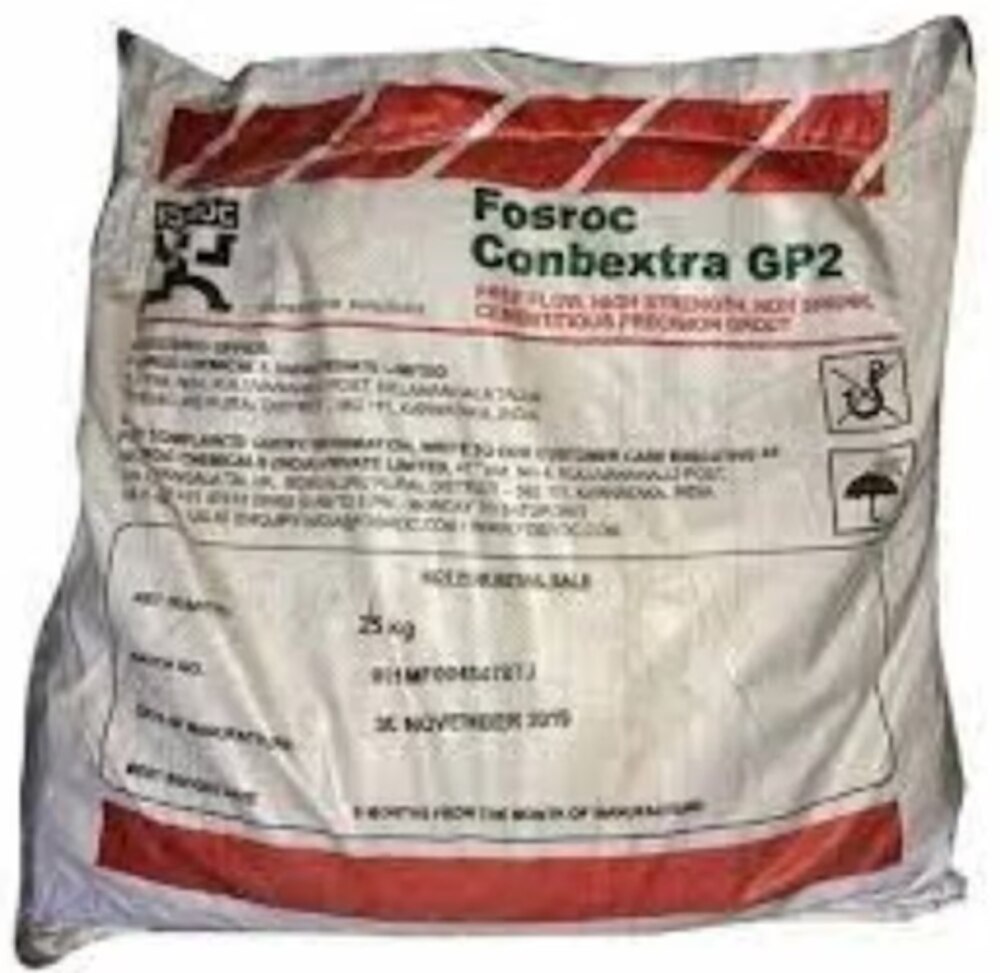
 | Epoxy Grout Fosroc Conbextra GP2 Epoxy Grout Supplier Packaging Size 25 kg Brand Fosroc Usage/Application Construction Form Powder Country of Origin Made in India Packaging Type HDPE Bag Tensile... View product → |
 | Grouting Compound Suppliers Packaging Size 20 Kg Usage/Application Construction Brand Fosroc Color Grey Grade Standard Industrial Grade Packaging Type Bag Shelf Life 2... View product → |
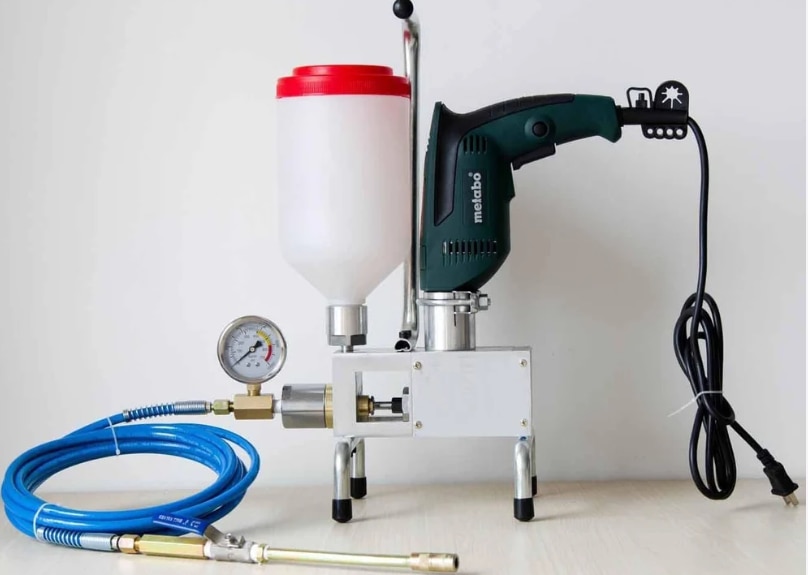 | Epoxy Grout Supplier Method Of Grouting Injection Grouting with Machine Injection Grouting Type PU Applicable Area Wall Property Type Commercial Ceiling/Wall... View product → |